
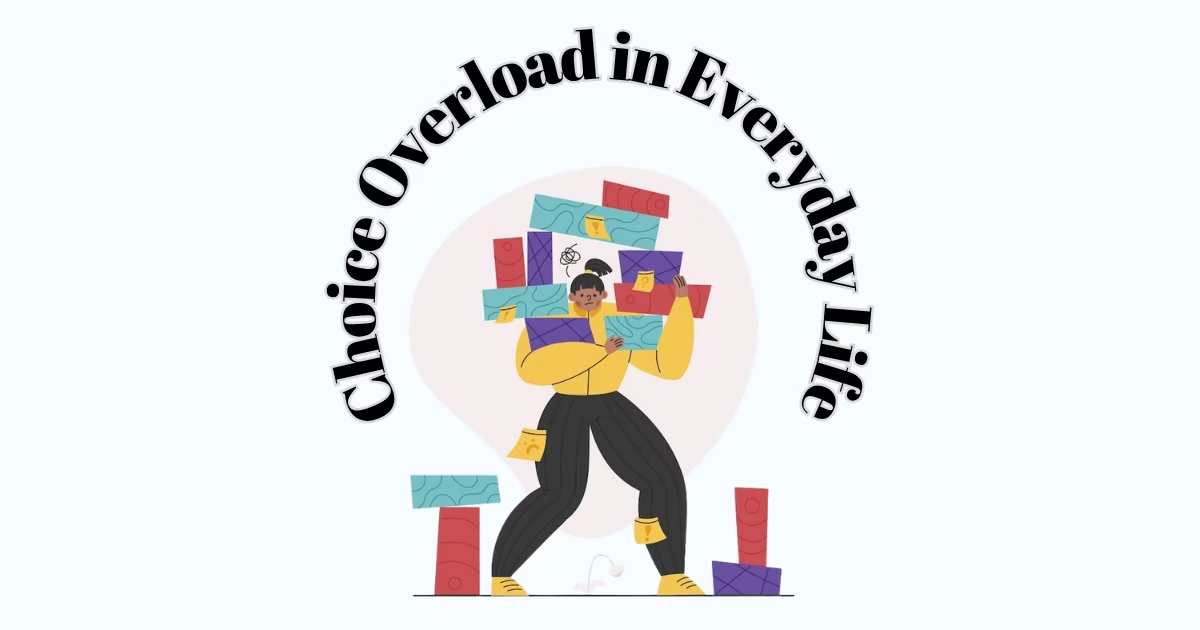
It’s a funny thing, isn’t it? We’re told that having choices is a good thing, a sign of freedom and control. And largely, that’s true. The ability to pick what we want to eat for dinner, what to wear, or even what to watch on streaming services can feel liberating. However, sometimes, the sheer volume of what’s available can actually make us feel… well, stuck. This is where the tricky dance between autonomy and choice overload comes into play in our busy lives. This makes very important that we understand to deel effectively with Choice Overload in Everyday Life
The Allure of Autonomy and the Paradox of Too Much
We all crave a sense of autonomy, that feeling of being the captain of our own ship, steering our own course. It’s deeply ingrained. Think about it: when we feel we have control over our decisions, we’re often more motivated, more engaged, and generally happier. This is particularly relevant in how we approach tasks, whether it’s learning something new or tackling a project at work. Giving people some wiggle room in how they approach things, maybe by letting them choose the order of tasks or the tools they use, can really boost their enthusiasm. It’s not just about letting them pick anything; it’s about giving them meaningful choice. This kind of structured freedom appears to be a sweet spot, where our desire for control is met without our brains feeling like they’re drowning in data.
However, there’s a tipping point. This is where the idea of choice overload in Everyday Lifereally bites. Imagine standing in the cereal aisle, faced with a wall of colorful boxes, each promising a different flavor, texture, or health benefit. Suddenly, the simple act of picking breakfast cereal becomes a Herculean task. What if you pick the wrong one? What if there’s a better option you’re missing? This paralysis, this feeling of being overwhelmed by too many possibilities, is a common experience. It turns something that should be simple into a source of stress. And the research seems to suggest that when the decision complexity outstrips our mental capacity, we don’t just get stressed; we often end up less satisfied with whatever choice we eventually make, or worse, we just avoid deciding altogether. It’s a classic case of “too much of a good thing.”
Navigating the Digital Deluge: Screen Time and Decision Fatigue
Our digital lives, in many ways, are epicenters of this autonomy versus choice overload in everyday life. Think about streaming services. You have access to thousands of movies and TV shows. On the surface, this is amazing! Want to watch a documentary about penguins? There are probably dozens. Fancy a cheesy 80s action flick? Endless options. The autonomy we have is incredible. We can curate our entertainment precisely to our mood.
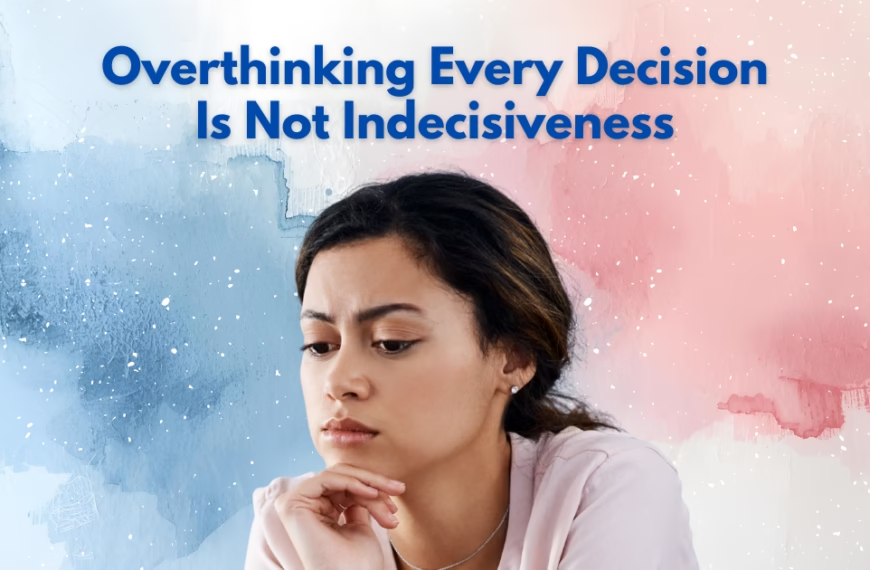
But then comes the scrolling. And the scrolling. And the additional scrolling. You spend twenty minutes browsing, comparing synopses, looking at thumbnails, and still haven’t landed on anything. This isn’t just a minor inconvenience; it’s an example of how too many options can actually dampen our motivation. Instead of feeling empowered, we can feel drained. This is what some might call decision fatigue, a kind of mental exhaustion that comes from making too many choices. It’s like your brain’s battery has been emptied by the sheer act of browsing. Each click, each mental comparison, uses up a bit of that precious cognitive energy.
The Illusion of Infinite Entertainment
It’s easy to get caught in the trap of thinking that more is always better that’s exactly creates choice overload in everyday life. When it comes to entertainment, this often translates to believing that with more content available, we’re more likely to find the perfect thing to watch. But as we’ve seen, this can backfire. Studies have indicated that when faced with an excessive number of choices, people might actually report feeling less pleased with their final selection, even if it’s objectively good. It seems our brains are wired to appreciate a managed selection rather than an overwhelming buffet — the same overload that can leave you feeling empty and unmotivated at work. So, that feeling of spending ages choosing can actually lead to less enjoyment in the long run.
Structured Pathways to Engagement
While unlimited choice can lead to paralysis, structured choices can foster engagement to deal with choice overload in everyday life. In educational settings, for instance, giving students a few well-defined options for how to complete an assignment – say, writing a paper, creating a presentation, or designing a podcast episode – can increase their sense of autonomy and their interest in the material. It’s about providing agency within a framework. This approach helps prevent the cognitive drain that comes from trying to figure out what to do, allowing learners to focus their energy on how to do it well. It appears our brains respond better when the path to making a decision is clear, even if there are a few different turns available.
Rethinking Everyday Decisions: From Urgent to Manageable
Let’s shift our gaze from the digital realm to the mundane, everyday choices that populate our lives. Things like deciding what to eat for lunch, what route to take to work, or even what task to tackle first when you sit down at your desk. These might seem trivial, but they add up. And when we’re faced with a multitude of these, even small decisions can contribute to that overall feeling of being overwhelmed.
The Power of Limiting Your Palate
One of the most practical takes on managing choice overload is surprisingly simple: just reduce the number of options. It sounds almost too obvious, but it’s incredibly effective. Instead of having twenty different types of coffee on the menu, a coffee shop might offer five. This isn’t about restricting freedom; it’s about clarifying it. Think about a restaurant menu. If it has pages and pages of dishes, it can be daunting. But a curated menu of, say, seven or eight well-crafted options often feels more manageable and suggests a focus on quality. Research and practical advice often points to a sweet spot, something around 3 to 5 options, as being ideal for many situations. This allows for variety without inducing paralysis.
Small Steps, Big Wins
Another effective strategy involves breaking down larger decisions into smaller, more digestible parts. Instead of thinking about “redecorating the entire living room,” you might focus on “choosing a new rug” or “deciding on paint colors.” This sequencing of choices, making them into smaller, more manageable steps, preserves the feeling of autonomy while reducing the cognitive load associated with a massive undertaking. It’s like eating an elephant one bite at a time; it’s still a lot of elephant, but it feels more achievable. This approach allows us to maintain our sense of control over the process without becoming overwhelmed by the end goal.
The Quiet Influence of Defaults and Familiarity
Sometimes, when faced with too many choices i.e. choice overload in our everyday life, we don’t consciously decide. We might just… not decide at all. This is where the concept of default options becomes so important. A default is what happens if you don’t make a choice. Think about software installations – there are often preselected options that most people just click through. This isn’t necessarily a bad thing. When designed thoughtfully, defaults can simplify our lives and guide us towards what’s likely a good, or at least acceptable, outcome.
Defaults as Subtle Guides
The power of defaults is well documented. When confronted with a complex array of choices, people often revert to the default. This has implications for everything from retirement savings plans to online privacy settings. If a default option is set to automatically opt you into something beneficial, like saving for retirement, it can lead to much higher participation rates than if people had to actively choose to join. This isn’t about taking away autonomy; it’s about using a nudge to support a desired behavior, making the “easy” path the beneficial one. It’s a way to streamline decision making when faced with overwhelm.
Brands as Decision Shortcuts
It’s also worth noting how familiar cues, like brand names, can help us navigate the sea of options. If you’re trying to pick a new brand of olive oil and you see one from a brand you’ve used and trusted before, you’re likely to pick that one without much thought. This is because the brand name acts as a heuristic, a mental shortcut. It reduces the amount of information you need to process. This is why effective branding can be so crucial; it provides a reliable signal in a cluttered marketplace. It suggests a certain level of quality or consistency, making the decision feel less risky and less taxing.
Releasing the Grip: Reframing Our Approach to Decisions
Perhaps one of the most impactful ways to manage the anxiety that can come with having too many choices is to shift our perspective. We often treat everyday decisions as if they carry immense weight, as if a “wrong” choice will have dire, long-lasting consequences. But for most of us, most of the time, this just isn’t the case.
The Low-Stakes Nature of Daily Choices
Consider the anxiety that can build up when deciding what to eat for lunch. What if you pick a salad and then later see someone with a delicious sandwich? You might feel a pang of regret. However, this minor disappointment is usually fleeting. Tomorrow, you can have a sandwich. This is what commentators on decision stress suggest: acknowledging that many daily decisions are reversible or low-stakes can significantly reduce the fear and hesitancy associated with making them. It frees us up to make a decision without obsessing over it. The ability to see these minor choices as opportunities rather than potential pitfalls is key.
Embracing Imperfection and Experimentation
Instead of striving for the “perfect” choice every single time, a more sustainable approach might be to embrace imperfection and view decisions as opportunities for learning and experimentation. When we give ourselves permission to make a choice that’s “good enough” rather than “perfect,” we reduce the pressure. This experimental mindset can be particularly useful when trying new things or exploring options. Did you pick a movie that turned out to be a dud? Well, you learned something about your taste, or about that particular director. This reframing allows us to maintain our sense of autonomy and forward momentum, even when our choices don’t turn out exactly as we hoped. It’s about progress over perfection, and that’s a much healthier way to live. Ultimately, finding that balance between having the freedom to choose and not being crippled by the sheer volume of options is an ongoing, personal journey. It’s about understanding our own limits and implementing strategies that help us navigate the modern world with a little less stress and a little more satisfaction.
Natural, Medication-Free Approaches to Panic Attack TherapyWhy Gen Z is Prioritizing Mental Health Like No Other Generation?Measuring Workplace Wellbeing Impact