
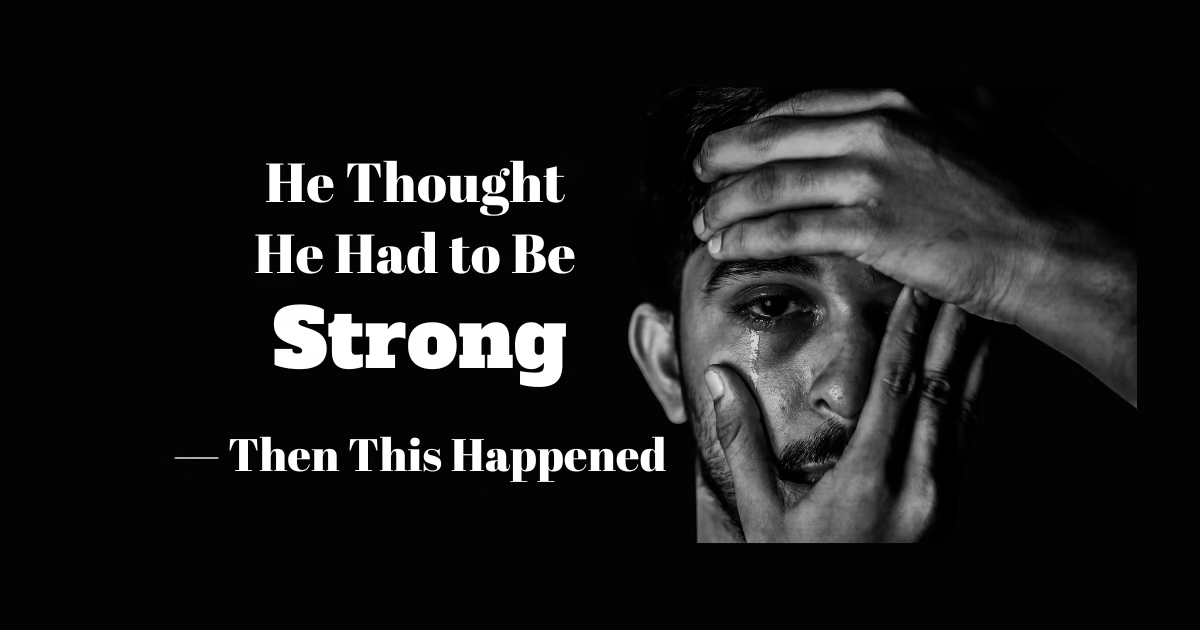
He coaches Little League on Saturdays, hits every deadline at work, and always seems fine — life looks perfect from the outside. And inside, he's quietly falling apart.
Male depression is one of the most under-diagnosed, under-discussed mental health crises in the United States today. According to the National Alliance on Mental Illness (NAMI), 79% of all suicide deaths in the U.S. are male. The suicide rate among men is nearly four times higher than among women. Yet men remain significantly less likely to seek help. This isn’t because men don’t suffer. It’s because the suffering rarely looks the way we’ve been taught to recognize it. Lets discuss the reality of hidden depression in strong men.
The Numbers We Can’t Ignore
Depression in America has reached historically high levels. A Gallup poll tracking U.S. adults found that 18.3% of Americans currently have or are being treated for depression in 2025, up roughly eight percentage points since 2015, with most of the surge happening after the COVID-19 pandemic. That projects to an estimated 47.8 million Americans living with depression right now.
Despite these numbers, only 42% of men pursue professional mental health support, compared to roughly 57% of women. And the gap gets darker: a landmark UCLA study published in the American Journal of Preventive Medicine found that 60% of men who died by suicide had no documented history of mental health conditions, meaning they never sought help, were never diagnosed, and never appeared on any clinical radar.
This is the hidden crisis. Not the men who ask for help — but the ones who never do.
Why American Men Stay Silent
The United States has a deeply embedded cultural script for masculinity: be the provider, stay composed under pressure, fix problems rather than feel them, and above all they never show vulnerability. This model of traditional masculinity, reinforced through sports culture, media, and workplace norms, creates a dangerous internal pressure valve.
When men suppress emotions consistently, distress doesn’t evaporate — it mutates. Instead of sadness, it emerges as rage, workaholism, or numbness. Instead of asking for help, men reach for a drink, another work project, or twelve more hours of silence. The Anxiety & Depression Association of America (ADAA) notes that nearly 1 in 10 American men experience depression or anxiety, but fewer than half ever receive treatment.
The cultural cost of this silence is measured in lives. In 2023, 39,045 men died by suicide in the U.S., compared to 10,270 women and suicide remains the second leading cause of death for American men aged 25–34.
What Male Depression Actually Looks Like
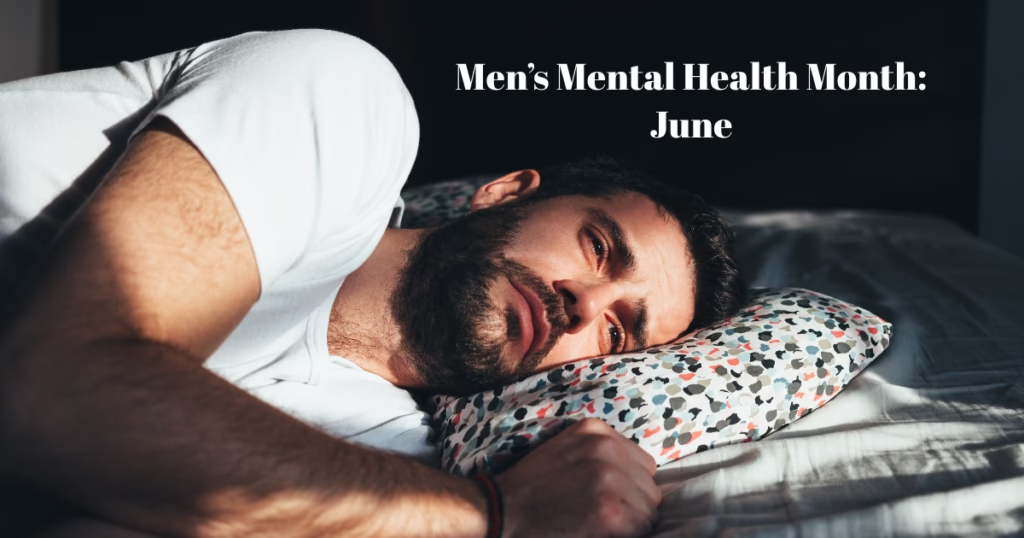
Forget the movie version of depression, the man weeping alone in a dark apartment. In the real world, especially among American men conditioned to stay strong, masked depression tends to look like this:
- Chronic irritability or explosive anger over small things — snapping at family, road rage, short fuse at work
- Overworking or over-scheduling — staying “too busy” to feel anything
- Alcohol or substance use — using a beer (or five) to decompress every night
- Emotional withdrawal — becoming distant from partners, kids, or friends
- Physical complaints — persistent back pain, headaches, or fatigue with no clear medical cause
- Loss of interest — sports, hobbies, sex, friendships lose their pull
- Risk-taking behavior — reckless driving, gambling, impulsive financial decisions
Notice what’s absent: visible sadness, crying, and the textbook symptoms most primary care physicians are trained to screen for. This clinical mismatch is one reason male depression is so chronically underdiagnosed. Clinicians call this presentation “male-type depression” — a real, recognized pattern in the psychological literature that simply doesn’t fit the standard checklist
The “Strong Man” Trap: When Resilience Becomes a Risk Factor
Resilience is genuinely valuable. Stoicism, in moderation, has its place. The problem is toxic stoicism, the cultural extreme that frames any emotional disclosure as weakness and any request for help as failure.
This belief system is particularly powerful in American working-class and military communities, where mental health stigma remains especially high. A PMC/NCBI review on men’s experiences of mental illness stigma found that stigma directly impairs help-seeking, reduces social connection, and deepens isolation, this makes men less likely to reach out precisely when they need support most.
Here’s the brutal irony: the men most celebrated for being “strong” are often the least equipped to recognize when they’re struggling — and the most likely to delay treatment until a crisis forces the issue.
Simple, Practical Steps to Break Free
Telling a man to “just open up” is rarely helpful on its own. These steps are practical, grounded in evidence, and designed to meet men where they actually are.
1. Start With Honest Self-Inventory
Most men are never taught to identify emotions with precision. Begin with a simple daily check-in: Am I irritable? Exhausted? Checked out? Anxious? The neuroscience behind emotional labeling — naming what you feel — shows it activates the prefrontal cortex and reduces amygdala reactivity, literally calming the brain’s stress response. You don’t need a therapist to start this practice.
2. Talk to One Trusted Person
Not to fix it. Not to get advice. Just to say it out loud. This could be a best friend, a brother, a partner, or a pastor or anyone who won’t immediately try to “solve” your problem. Interpersonal connection is one of the most evidence-backed protective factors against depression, and it doesn’t require a clinical setting.
3. Try Evidence-Based Therapy — It’s Not What You Think
Cognitive Behavioral Therapy (CBT) is the gold standard for depression treatment in the U.S. — practical, structured, and goal-oriented. It’s less about lying on a couch and more about identifying thought traps and changing behavior patterns. Acceptance and Commitment Therapy (ACT) is another strong option, especially popular with men because it’s action-focused rather than emotion-focused. Telehealth platforms like BetterHelp, Talkspace, and the VA’s Mental Health services make access easier than ever across all 50 states.
4. Move — Seriously and Consistently
The evidence for physical exercise as a treatment for depression is some of the strongest in mental health research. The CDC recommends at least 150 minutes of moderate-intensity activity per week and for men dealing with low-grade depression, this can meaningfully reduce symptoms. Running, lifting, hiking, or pickup basketball all count. The key word is consistently.
5. Audit the Numbing Behaviors
The U.S. has a complex relationship with alcohol, especially among men. If your default stress response involves a drink, a gaming binge, or overworking until midnight, it’s worth taking an honest look. These behaviors don’t resolve emotional pain, they defer it, and over time, they intensify depressive symptoms. Cutting back, even partially, can noticeably shift your baseline mood within weeks.
6. Find Your People
Men’s mental health groups (in-person and online) are growing across the U.S. Organizations like The ManKind Project and HeadsUpGuys offer community-based support specifically designed for men who aren’t ready for formal therapy. The simple act of hearing another man say “I’ve been there too” is clinically underrated and powerfully effective.
When to Get Help Immediately
If you — or a man you know — has experienced any of the following for two or more weeks, it’s time to call a doctor or mental health professional without delay:
- Persistent low mood, emptiness, or emotional numbness
- Withdrawal from relationships, work, or daily life
- Thoughts of self-harm, suicide, or feeling like a burden to others
- Significant changes in sleep, appetite, concentration, or energy
In the U.S., help is one call or text away:
- 988 Suicide & Crisis Lifeline — call or text 988 (24/7, free, confidential)
- Crisis Text Line — text HOME to 741741
- Veterans Crisis Line — call 988, press 1
- SAMHSA National Helpline — 1-800-662-4357 (free, confidential, 24/7)