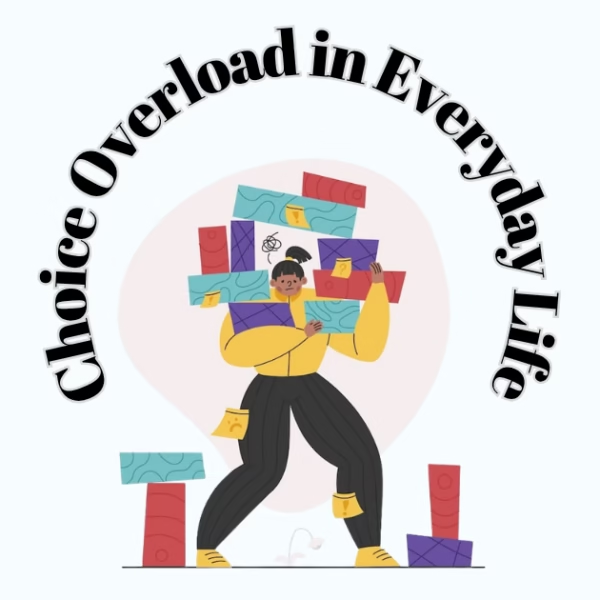


Life can sometimes feel like a runaway train, right? One minute you’re chugging along, the next you’re buried under a pile of commitments, anxieties, and general stuff. That persistent feeling of being swamped, like you’re constantly playing catch-up, isn’t just a sign that you’re a little stressed. Psychology suggests it’s actually an important message from your brain, a signal indicating something needs attention, not a defect in your character or a personal failing.
When we talk about feeling overwhelmed, it’s not just a fleeting bad mood. It’s that pervasive sense of having too many things demanding a decision, too much to do, too much to think about, and not enough resources (time, energy, emotional bandwidth) to handle it all effectively. This isn’t just about your to-do lists, though those certainly contribute! It’s often related to how your brain processes information and manages stress. Our brains are incredible organs, designed to keep us safe and functioning, but they have limits.
The Brain’s Alarm System
Think of feeling overwhelmed as your brain’s internal alarm bell. When the demands placed upon you—whether they are professional, personal, or even internal (like self-criticism)—exceed your perceived capacity to cope, your brain kicks into high gear. It’s essentially sending out a distress signal, much like a fire alarm indicating smoke, even if there’s no visible flame. This response is rooted in our primal survival instincts. Historically, being overwhelmed by threats in our environment would have signaled danger, prompting us to either fight, flee, or freeze. While modern-day threats are rarely saber-toothed tigers, our brains often react with a similar physiological cascade. This means increased heart rate, shallow breathing, and a general sense of unease. It’s a mechanism designed to catch your attention and prompt action.
The Cognitive Load Factor
Our brains have a finite capacity for processing information at any given moment. This is known as cognitive load. When you’re managing multiple tasks, switching between different topics, and simultaneously trying to remember appointments, your cognitive load can skyrocket. Imagine trying to juggle ten balls at once; eventually, some are bound to drop. When this happens consistently, the feeling of being overwhelmed becomes chronic. It’s like your mental workspace has become so cluttered that you can’t find anything, let alone focus on one item effectively. This increased load can make even simple decisions seem monumental, draining your mental energy and contributing to that pervasive feeling of being swamped.
In the article “According to Psychology, Feeling Overwhelmed Every Day Is a Signal, Not a Weakness — Here’s What Your Mind Is Asking For,” the author explores the importance of recognizing feelings of overwhelm as indicators of our mental health needs rather than signs of personal failure. For those seeking further insights into mental health support, a related resource can be found at Psychovista’s confidential and private mental health counseling services, which offers valuable information on how to address and manage overwhelming emotions effectively.
Deciphering What Your Mind Is Asking For
If feeling overwhelmed is a signal, what exactly is your mind trying to tell you? It’s usually a plea for more resources, not just physical ones like sleep, but also mental and emotional resources. Understanding these underlying needs is the first step toward addressing the issue rather than just enduring it. For a broader look at how anxiety and stress can overlap with this experience, see our anxiety and stress guide.
A Need for Boundaries and Prioritization
Often, daily overwhelm stems from a lack of clear boundaries. This might involve saying “yes” too often when you should say “no,” taking on commitments that don’t align with your values, or allowing work to bleed into your personal life. Your mind may be subtly, or not so subtly, asking you to define what’s truly important and protect your time and energy. Learning to prioritize isn’t just about making a to-do list; it’s about making conscious choices about where your attention goes. What absolutely needs to get done today? What can wait? What can be delegated? Establishing these boundaries creates mental breathing room.
A Quest for Clarity and Focus
When you’re overwhelmed, your thoughts can feel like a tangled mess. Your brain might be asking for a moment of stillness, a chance to untangle those threads. Often, this translates to a need for clarity on what’s truly happening. What are the specific tasks or worries contributing most to this feeling? Can you break down large, daunting tasks into smaller, more manageable steps? Focusing on one thing at a time, even for a short period, can significantly reduce the sense of mental chaos. This isn’t easy in a world that constantly bombards us with notifications and demands, but training your focus can be a powerful antidote to overwhelm.
A Desire for Emotional Processing
Sometimes, the feeling of overwhelm isn’t just about external demands; it can be an accumulation of unprocessed emotions. Stress, anxiety, frustration, or even sadness can build up, and when they don’t get a chance to be acknowledged and processed, they manifest as a general feeling of being swamped. Your mind might be gently nudging you to pay attention to your emotional landscape. This could involve journaling, talking to a trusted friend, or even just taking a quiet moment to sit with whatever feelings arise without judgment. Ignoring these internal signals often just makes them louder until they demand your attention in less desirable ways.
Practical Steps to Unwind the Overwhelm

Okay, so your brain is sending signals. What can you actually do about it? The good news is there are concrete strategies you can employ to respond to these calls for help.
Identify Your Overwhelm Triggers
Start by becoming a detective of your own experiences. What specific situations, thoughts, or people seem to kick off or intensify that feeling of being overwhelmed? Is it a particular time of day? A specific type of task? The anticipation of a big event? Keeping a simple journal for a week or two, noting down when you feel overwhelmed and what was happening just before, can offer surprising insights. This self-awareness is incredibly powerful because it allows you to anticipate potential overload and take proactive steps rather than just reacting once you’re already in the thick of it. For instance, if checking emails first thing in the morning always puts you in a tailspin, perhaps try tending to one focused task before opening your inbox.
Practice Strategic Saying “No”
This might be one of the toughest but most impactful strategies. Your energy and time are finite resources. Saying “yes” to everything, whether it’s an extra project at work, a last-minute favor for a friend, or an invitation you’re not excited about, often means saying “no” to your own well-being. It’s about protecting yourself. You don’t need elaborate excuses; a simple, “I appreciate you thinking of me, but I can’t take on anything new right now” or “That sounds interesting, but my plate is full” often suffices. This isn’t selfish; it’s self-preservation. It allows you to dedicate your best self to the things that truly matter to you and prevent that feeling of being stretched too thin.
Implement a “Brain Dump” Routine
When your mind feels like a cluttered attic, a brain dump can be incredibly liberating. This involves taking 5-10 minutes to write down everything that’s on your mind—tasks, worries, ideas, lingering thoughts, things you need to remember. Don’t edit, don’t organize, just get it all out of your head and onto paper or a digital document. The simple act of externalizing these thoughts can create a profound sense of relief. Once it’s all out, you can then begin to categorize, prioritize, or even discard items that aren’t actually pressing. This practice helps clear your mental RAM, so to speak, making space for more focused thought and less general background noise.
Cultivating Resilience and Well-being

Beyond immediate tactics, addressing chronic overwhelm involves building up your overall mental and emotional strength. This isn’t about becoming immune to stress, but rather developing the capacity to navigate challenges without constantly feeling drowned.
Embrace Mindfulness and Presence
Much of overwhelm comes from either replaying past events or catastrophizing future ones. Mindfulness is the practice of gently bringing your attention to the present moment without judgment. This doesn’t require hours of meditation, though that’s an option. It can be as simple as truly savoring your morning coffee, noticing the sounds around you during a walk, or focusing entirely on the task at hand for a few minutes. Regularly practicing mindfulness can help train your brain to stay anchored in the now, reducing the mental loops that often fuel feelings of being overwhelmed. It helps you recognize when your thoughts are running away with you and gently guide them back to the present.
Prioritize Rest and Recovery
In our always-on culture, rest is often seen as a luxury or something to “earn” after everything is done. However, adequate sleep, breaks throughout the day, and genuine downtime are not optional extras; they’re fundamental to your brain’s ability to function and cope. When you’re consistently sleep-deprived or operating on fumes, your ability to regulate emotions, focus, and solve problems is severely compromised, making you more susceptible to feeling overwhelmed. Think of your brain like a battery; it needs to be recharged regularly. This means not just physical sleep, but also mental rest—stepping away from screens, engaging in hobbies, or simply doing nothing at all sometimes.
Seek Connection and Support
Humans are social creatures, and isolation can exacerbate feelings of overwhelm. Talking through your challenges with a trusted friend, family member, or mentor can provide new perspectives, validate your feelings, and offer practical solutions. Sometimes, just articulating what you’re experiencing can make it feel less daunting. If the overwhelm is persistent and significantly impacting your daily life, considering professional support, like therapy or counseling, is a wise step. A mental health professional can provide personalized strategies, help you uncover deeper roots of your stress, and equip you with coping mechanisms tailored to your situation. Remember, asking for help is a sign of strength, not weakness.
In exploring the concept that feeling overwhelmed is a signal rather than a weakness, it is important to consider effective strategies for managing such emotions. A related article discusses various techniques for coping with stress and anxiety, providing valuable insights into how to master your emotions. By understanding the underlying causes of overwhelm, individuals can better respond to their mental health needs. For more information on this topic, you can read the article on mastering your emotions.
Reframing Your Perspective
Ultimately, the feeling of being overwhelmed isn’t an indictment of your capabilities; it’s a dynamic feedback loop from your internal system. It suggests that the demands of your environment, whether internal or external, are currently outstripping your current resources or readiness to cope. By listening to this signal, identifying what your mind genuinely needs, and taking intentional steps to address those needs, you can transform that persistent feeling into a catalyst for growth and greater well-being. It’s about adjusting your sails, not abandoning the ship. You have more agency than you might think in shaping how you respond to life’s many challenges.