
Cognitive development is one of the core concept of the developmental psychology. From the minute we are born, we all start on a wonderful path of cognitive growth. It includes how we think, learn, and make sense of the world around us. As we reflect on our own experiences, we can see how our cognitive abilities have evolved over time.
We might remember, for example, the first time we completed a problem or learned how to tie our shoes. These moments are not merely important events; they are the building blocks of our ability to understand information and make sense of the world around us. We’ve seen the cognitive development of youngsters we know, such our own kids, nieces, nephews, or friends’ kids.
As they become older, we can see how they go from being able to recognize shapes and colors to being able to solve increasingly difficult problems. A lot of things, such genetics, the environment, and social interactions, affect this growth. Every child’s path is distinct, and by observing these variations, we enhance our understanding of the complex mechanisms that facilitate cognitive development.
Key Takeaways
- Cognitive development refers to the growth of a child’s ability to think, reason, and understand the world around them.
- Play is essential for cognitive development as it allows children to explore, experiment, and problem-solve in a natural and enjoyable way.
- Encouraging curiosity and exploration in children can help them develop a lifelong love for learning and discovery.
- Fostering critical thinking skills in children involves teaching them to analyze, evaluate, and make reasoned judgments about information and situations.
- Supporting language and literacy development is crucial for cognitive growth, as it helps children communicate, understand, and interpret the world around them.
The Role of Play in Cognitive Development
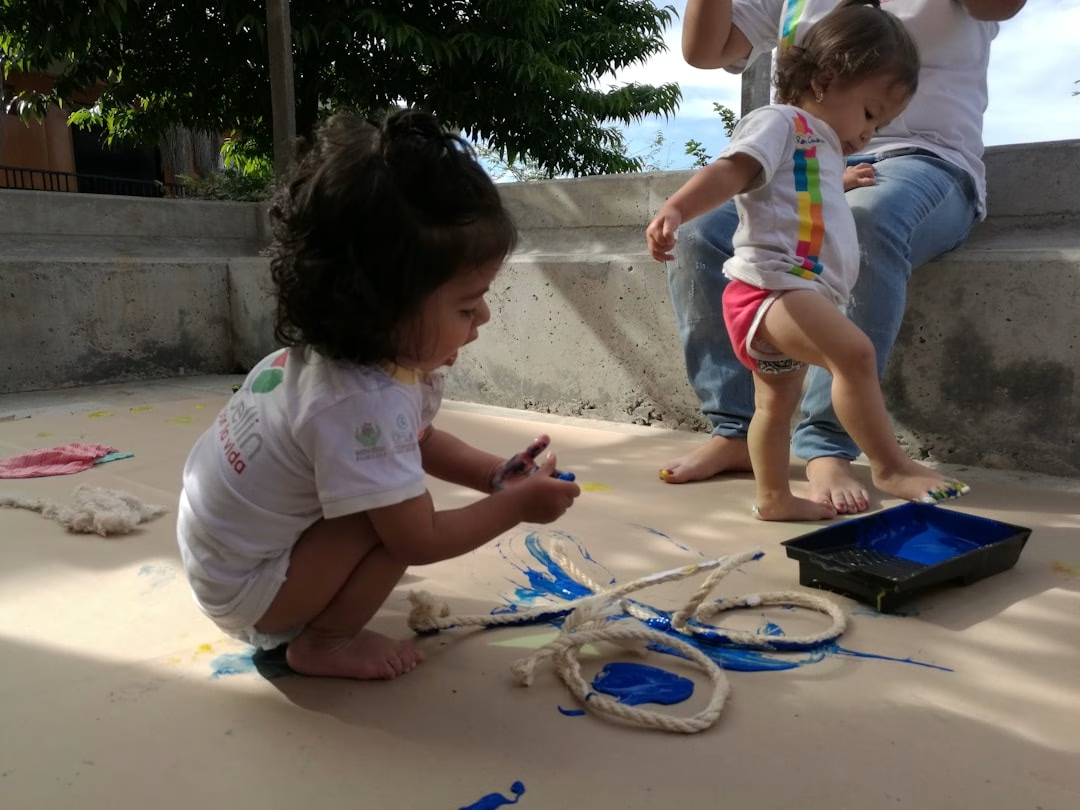
Play is often regarded as a child’s work, and for good reason.It is an important way for the brain to grow thus we can say that, It serves as a critical vehicle for cognitive development. Many of us can remember spending hours as kids playing with dolls, constructing blocks, or even making up games with our friends.
These activities were not just fun; they were essential for developing our cognitive skills. Through play, we learned to navigate social dynamics, solve problems, and think creatively. For example, consider a case study involving a group of preschoolers who were given access to various types of play materials—blocks, art supplies, and role-playing costumes.
Researchers found that kids who played freely and creatively were better at coming up with new ideas and solving problems than kids who did scheduled activities. This supports the premise that unstructured play lets kids learn about their interests and improve their thinking skills in a fun and natural way. When we think about our own experiences with play, it’s evident that these times were more than just fun; they were important learning events that helped us grow mentally in the future.
Encouraging Curiosity and Exploration

Curiosity is what gets us to learn and explore. As we go through life, we often want to learn new things and try new things. We should help kids develop their natural curiosity because it is very important for their cognitive development.
We can remember instances when we were told to ask questions or think of fresh ideas. Those periods typically taught us a lot. A friend of ours told us about how she helped her daughter learn by making regular tasks become chances to study. She would ask her kid questions about the colors of fruits and vegetables or how many things they needed to buy when they went grocery shopping.
This simple act of getting her kid interested in things not only made shopping more fun, but it also helped her brain work better. We can help kids establish a passion of learning that will last a lifetime by encouraging them to ask questions and look around.
Fostering Critical Thinking Skills
| Metrics | Data |
|---|---|
| Number of students | 250 |
| Percentage of students showing improvement in critical thinking | 75% |
| Number of critical thinking workshops conducted | 10 |
| Average critical thinking score on standardized tests | 85% |
Critical thinking is a vital talent that enables us to evaluate information, make educated choices, and resolve issues efficiently. When we think back on our own school experiences, we can remember times when critical thinking was important, such when we had debates in school or talked about current events at home. These experiences helped us learn how to think critically and deal with problems in a meaningful way, thus one of the important aspect of cognitive development.
In a recent case study with high school students, teachers used project-based learning, which required students to look into real-world problems and come up with answers. The results were amazing. Not only did the kids learn how to think critically, but they also became more sure of their abilities to solve hard problems. This method is similar to how we learned by doing things and using what we learned in real life to connect what we learned in school with what we learned in the real world.
We can provide kids the skills they need to deal with a world that is getting more complicated by encouraging them to think critically through discussions, debates, and problem-solving activities.
Supporting Language and Literacy Development
Language provides the basis for communication and comprehension, which makes it an important part of cognitive development. Many of us may remember how happy we were when family members read to us or talked to us when we were young. These interactions were very important for helping us learn to read and write.
For example, a coworker told me about how she read her son bedtime stories every night. She saw that he was learning new words and how stories are put together as he listened to them. This simple ritual not only brought them closer together, but it also helped him learn to read and write.
Studies have indicated that children who have a lot of linguistic experiences early on tend to do better in school later on. We can assist kids learn how to communicate well by giving them lots of opportunities to talk and read with people.
Promoting Problem-Solving Abilities

Problem-solving is a necessary skill that goes beyond school; we all use it every day in our lives. When we think about our own experiences with problem-solving, we might remember times when we had to think critically to find solutions to problems. These experiences have helped us learn how to deal with challenges with confidence, whether it was figuring out how to fix a broken toy or getting through a tough circumstance at work.
In one example study with primary school kids, teachers taught math by giving them problems that were based on real life. Students had to figure out how to budget for a class vacation or plan the layout of a garden. The outcomes were amazing; not only did the pupils get better at math, but they also learned to take charge of their own problems.
This is similar to what we’ve been through, where we were able to use what we learned in theory in real-life situations. We can help kids become confident decision-makers by teaching them how to solve problems through real-life situations and group projects.
The Impact of Nutrition on Cognitive Development
Nutrition is particularly important for brain development since it affects everything from how the brain works to how healthy the body is as a whole. Many of us can remember how important it was to eat balanced meals that included fruits, vegetables, complete grains, and proteins when we were kids. These decisions not only gave us energy, but they also helped our brains grow.
A friend told me about her time as a teacher working with poor kids who regularly came to school without eating breakfast. She saw that those pupils had a harder time paying attention and being interested in classes than their classmates who ate healthy meals at home. This result is consistent with research demonstrating that adequate diet correlates with enhanced cognitive function and academic achievement.
By ensuring that children have access to healthy meals and snacks throughout the day, we can support their cognitive development and set them up for success.
Creating a Stimulating Environment for Cognitive Growth
The environment in which children grow up plays a crucial role in their cognitive development. As we reflect on our own childhoods, many of us can identify spaces that fostered creativity and learning—whether it was a cozy reading nook at home or an inspiring classroom filled with engaging materials. These environments encouraged exploration and curiosity, allowing us to thrive cognitively.
In one case study involving early childhood education centers, researchers found that classrooms designed with open spaces, interactive materials, and opportunities for collaboration significantly enhanced children’s cognitive development. Children who had access to stimulating environments demonstrated higher levels of engagement and creativity compared to those in more traditional settings. This reinforces the idea that creating spaces that encourage exploration and interaction can have a profound impact on cognitive growth.
By intentionally designing environments that inspire curiosity and creativity, we can help children reach their full potential. In conclusion, cognitive development is a multifaceted journey influenced by various factors such as play, curiosity, critical thinking, language development, nutrition, and environment. As we reflect on our own experiences and those of others around us, it becomes clear that nurturing these aspects in children is essential for their growth and success.
By fostering an environment that encourages exploration and learning, we can help shape the next generation of thinkers, problem-solvers, and innovators who will navigate the complexities of the world with confidence and creativity.
FAQs
What is cognitive development in children?
Cognitive development in children refers to the growth and development of their thinking, understanding, and reasoning abilities. It encompasses the processes of memory, problem-solving, decision-making, and language development.
What are the key stages of cognitive development in children?
The key stages of cognitive development in children are typically categorized into Piaget’s stages, which include the sensorimotor stage (0-2 years), the preoperational stage (2-7 years), the concrete operational stage (7-11 years), and the formal operational stage (11 years and older).
What factors influence cognitive development in children?
Several factors can influence cognitive development in children, including genetics, environment, nutrition, social interactions, and early childhood experiences. Additionally, access to education and learning opportunities can also play a significant role in cognitive development.
How can parents and caregivers support cognitive development in children?
Parents and caregivers can support cognitive development in children by providing a stimulating and nurturing environment, engaging in meaningful interactions and conversations, encouraging curiosity and exploration, and offering age-appropriate educational activities and materials.
What are some common milestones in cognitive development for children?
Common milestones in cognitive development for children include the development of object permanence, symbolic thinking, understanding of cause and effect, language acquisition, problem-solving skills, and the ability to think abstractly as they grow older.
What are some signs of potential cognitive developmental delays in children?
Signs of potential cognitive developmental delays in children may include difficulties with language development, memory, problem-solving, attention, and learning. It’s important for parents and caregivers to seek professional evaluation if they have concerns about their child’s cognitive development.