

Panic attacks have a way of arriving uninvited. They rarely ask for a convenient time. Sometimes it’s in the middle of a crowded subway. Other times, right before an important meeting or even at home, sitting quietly. I’ve worked with people who describe it as “a sudden storm inside my chest” — racing heart, dizzy vision, shaking hands, and the terrifying sense that something terrible is about to happen. Here I am sharing my experences that how I treat aPanic Attacks in the Moment.
I want to share my step-by-step approach, how I help people in the moment when panic attacks strike. This isn’t just theory pulled from a textbook. It’s a combination of evidence-based therapy strategies, clinical training, and the little things I’ve seen clients actually use when the panic feels unbearable.
If you’re reading this because you or someone you love is struggling, I’ll say upfront: panic attacks are treatable. They’re frightening, yes, but they are not dangerous in themselves. The body is firing off false alarms. And while long-term therapy (like CBT for panic disorder) is often the backbone of treatment, what I’ll focus on here is the “emergency toolkit” — practical steps that can ease the episode as it happens.
What Panic Attacks Feel Like (And Why They Spiral)
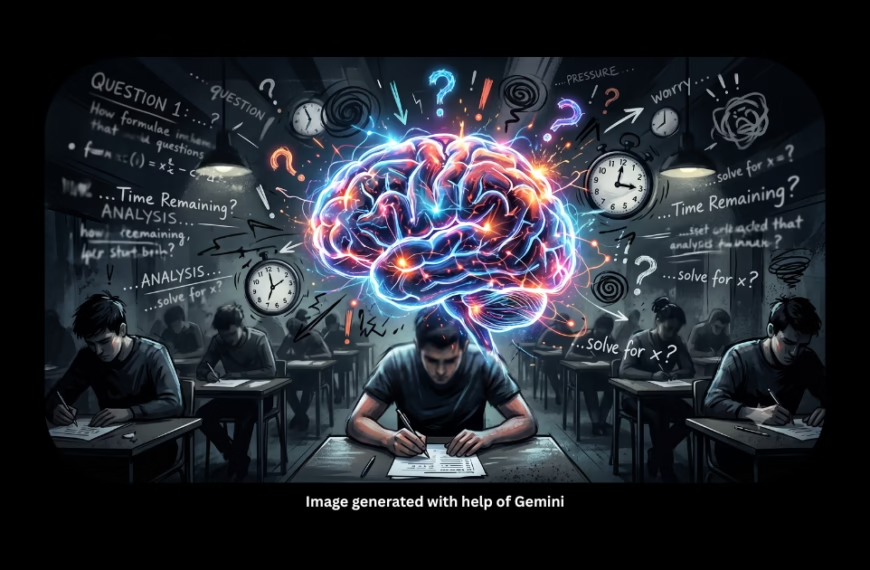
A panic attack often begins with one physical sensation. Maybe a skipped heartbeat. Maybe shortness of breath. For someone prone to panic, that single sensation may instantly trigger catastrophic thoughts: Am I having a heart attack? Am I about to faint? Am I losing control?
The body then follows the mind. Heart rate speeds up. Adrenaline floods in. Chest tightens. The sensation snowballs. Clients often describe it as a cycle they can’t get off.
Research suggests panic attacks are linked to misinterpreting bodily signals. A racing heart after running up the stairs? For one person, it’s just “I need to catch my breath.” For another, it may appear as a medical emergency. That interpretation fuels more fear, and the loop continues.
Step One: Naming It
When panic begins, I often encourage people to name it: “This is a panic attack. Not a heart attack. My body is misfiring.”
It sounds almost too simple, but naming the experience creates a bit of distance. Think of it like labeling a folder. When you know what it is, you don’t get lost searching for explanations. Some clients tell me that just reminding themselves “panic is not fatal” lowers the intensity by a notch. First step is one of the major step to treat panic attacks in the moment as it shows your commitment to take action.
Step Two: Grounding in the Present
When panic hits, your mind rockets into catastrophic “what if” futures. To bring it back, I often teach grounding techniques. These are small, practical exercises to pull attention away from the panic storm and anchor it in the present moment.
A favorite is the 5-4-3-2-1 method:
- Name 5 things you can see (the blue notebook, the chair, the shoes someone’s wearing).
- Name 4 things you can touch (hands on thighs, cool surface of the desk).
- Name 3 things you can hear (traffic outside, the hum of a fan).
- Name 2 things you can smell.
- Name 1 thing you can taste.
It’s simple. But when practiced, it disrupts the mental spiral.
Another is carrying a grounding object — something tactile like a smooth stone, a coin, or even a piece of fabric. Touching it becomes a reminder: I’m here, I’m safe.
Step Three: Breathing Like You Mean It
You’ve probably heard “just breathe” a hundred times. But here’s the thing — during a panic attack, breathing becomes shallow and rapid, which actually worsens dizziness and chest pain. Learning to control breathing is one of the most effective ways to short-circuit panic.

I often teach the 4-7-8 breathing technique:
- Inhale for 4 seconds.
- Hold for 7.
- Exhale slowly for 8.
If that feels too hard mid-panic, even just lengthening the exhale (say, inhale for 3, exhale for 5) may calm the nervous system. Clients have reported this almost acts like “hitting the brakes” when panic feels like a runaway car. Breating is the most important step to treat panic attacks in the moment as it gives you quick releaf and breating is very ancient menthod mentioned in Indian yoga system.
Step Four: Shifting the Inner Dialogue
Panic attacks come with harsh inner commentary: I’m weak. People can see me. I can’t cope. These thoughts fuel the fire.
One thing I do with clients is help them practice alternative self-talk before the attack arrives. For example:
- “This is uncomfortable, but it will pass.”
- “My body is overreacting — I’ve survived this before.”
- “I can ride this out.”
During an episode, these words may not feel magical. But repeated often, they begin to rewire the brain’s habitual response.
Step Five: Movement — If Possible
Some people freeze during panic. Others pace. Both are valid. What seems to help, especially if you’re in a safe environment, is controlled movement.
Walking slowly while focusing on your steps (“right foot, left foot”) grounds attention in the body. Stretching arms overhead, rolling shoulders, or clenching/releasing fists may also interrupt the spiral.
That said, if movement makes symptoms worse (like dizziness), stillness plus breathing may be safer. I remind people: one size doesn’t fit all.
Panic in Public Places
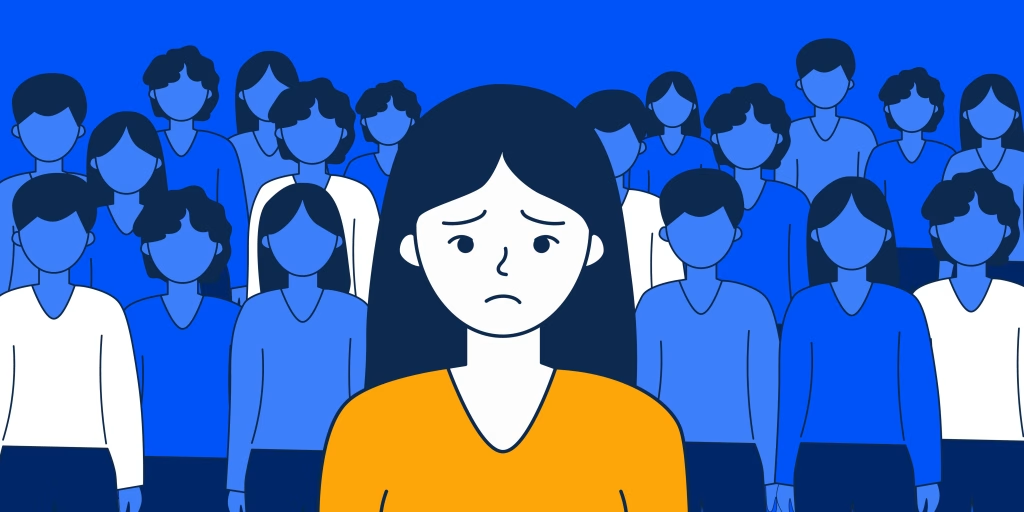
One of the most frightening scenarios clients share is having a panic attack in public — on a bus, in a store, during a class presentation. The added fear of people noticing can make it ten times harder.
Here’s what I suggest:
- Find a micro-space. Even stepping to the side of a hallway or into a restroom can provide privacy.
- Use discreet grounding. Touch a ring on your finger, feel the strap of your bag, or silently run through 5-4-3-2-1 in your head.
- Carry a “panic card.” A small note with reminders: “This is panic. It will pass. Breathe.” Some clients even keep a calming mantra on their phone lock screen.
Remember, most strangers are too absorbed in their own lives to notice your struggle. And if they do notice? They likely assume you’re just feeling unwell — which, honestly, you are.
Longer-Term Work (Because Quick Fixes Only Go So Far)
While the techniques above may ease panic attacks in the moment, they don’t solve the underlying cycle. That’s where therapy — particularly cognitive behavioral therapy (CBT) — comes in.
CBT works by identifying the catastrophic thoughts and gradually exposing you to the sensations you fear, in safe, structured steps. Over time, the brain learns: this racing heart isn’t deadly; this dizziness isn’t disaster.
Some people also find medication (like SSRIs or anti-anxiety meds) helpful, especially if panic attacks are frequent and severe. As a psychologist, I don’t prescribe, but I collaborate closely with psychiatrists when that option seems appropriate.
I’ll add this: alternative strategies like yoga, mindfulness meditation, or even cold-water face splashes can complement therapy. Are they universally effective? Not always. But for some, these additions make a difference to treat panic attacks in the moment and for long.
A Personal Note
I still remember one of my first clients with panic disorder telling me: “I thought I was dying in the supermarket aisle. My cart was half full, and suddenly my heart felt like it was exploding.”
Months later, after practicing these techniques, she described a new experience: another panic attack hit while she was in line at the bank. But instead of bolting out, she stayed, used her breathing, and whispered to herself: “This will pass.” And it did. The pride in her face when she told me — that’s what keeps me doing this work.
Final Thoughts
Panic attacks are terrifying. They feel like losing control, but they are survivable. With practice, the right tools, and often therapy, people learn not just to endure them, but to change their relationship with them.
if you wish to know more about other ways click here: Natural, Medication-Free Approaches to Panic Attack Therapy
If panic attacks are frequent or overwhelming, please consider reaching out for professional help. A therapist trained in anxiety disorders can guide you through evidence-based strategies. And if you ever feel unsafe — if you think you’re in medical danger — it’s always wise to get checked out.
Quick Recap (Your Panic First Aid Kit)
- Name it: “This is a panic attack.”
- Ground: Use 5-4-3-2-1 or a grounding object.
- Breathe: Slow exhale, or try 4-7-8 breathing.
- Self-talk: Replace catastrophic thoughts with calming reminders.
- Move: Walk, stretch, or gently anchor in your body.
These steps won’t erase panic forever, but in the moment, they can make the storm a little less violent. Hope my approach to treat panic attacks in the moment will help you whenever you are in need.